

Education continues to evolve as teachers and students explore new ways to make learning more interactive, enjoyable, and effective. Traditional teaching methods remain important, but digital learning tools have introduced creative approaches that encourage participation and help students understand challenging concepts. Quiz-based platforms are particularly useful because they combine questions, immediate feedback, and friendly competition. These features can make classroom activities more interesting while giving students opportunities to test their knowledge in a relaxed environment.
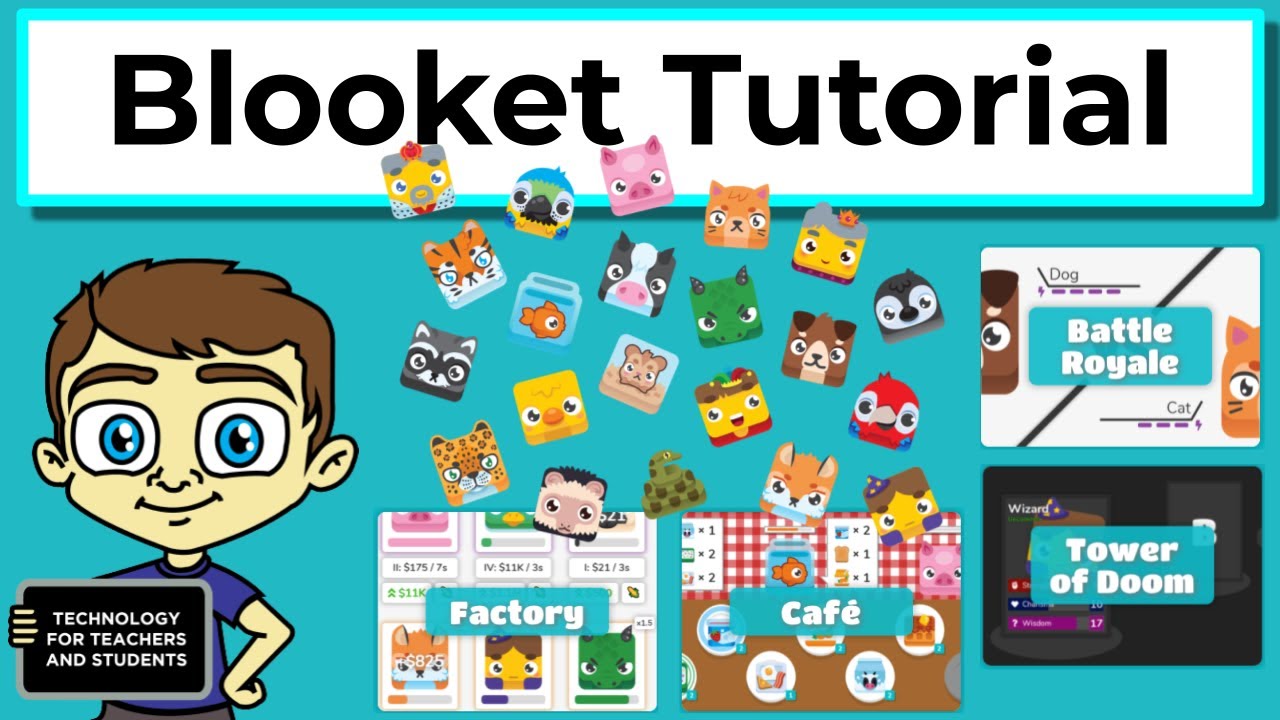
Blooket is an educational gaming platform that brings quiz questions and game-based activities together. Teachers can prepare question sets, organize classroom sessions, and allow students to participate through compatible devices. Instead of answering questions on a conventional worksheet, learners interact with a game environment that can include challenges, rewards, progress tracking, and competition. This approach can encourage students who might otherwise hesitate to participate in traditional classroom discussions.
The value of educational games goes beyond entertainment. When activities are designed around clear learning objectives, students can review important information, identify knowledge gaps, and strengthen their understanding through repeated practice. Teachers can also use interactive quizzes to introduce a topic, reinforce a lesson, or assess comprehension. Understanding how these tools work helps educators choose activities that support meaningful learning rather than simply keeping students occupied.
What Is Blooket and How Does It Work?
Blooket is a game-based learning platform that allows educators to turn question-and-answer activities into interactive experiences. Its central concept is straightforward: teachers create or select question sets, choose an available game mode, and invite students to participate. Questions can cover subjects such as mathematics, science, history, vocabulary, geography, and general knowledge. The format can be adapted to different age groups, classroom subjects, and learning objectives.
The platform combines familiar quiz mechanics with game elements that make each session feel different from an ordinary test. Depending on the selected mode, students may answer questions to earn rewards, advance through challenges, or compete against classmates. The questions provide the educational foundation, while the game mechanics encourage learners to remain involved. Teachers can therefore use the same set of questions in different ways, allowing students to revisit important concepts without repeating precisely the same classroom experience.
How Students Participate in a Game
A typical classroom session begins when a teacher selects a suitable question set and starts a game. Students then join the session using the participation information provided by the teacher. Depending on the activity and platform requirements, learners may enter a game code and choose a display name before beginning. Once the session starts, questions appear on the student’s device, and responses contribute to progress according to the rules of the selected mode.
For example, a teacher reviewing multiplication tables might organize a short activity containing questions about multiplying two-digit numbers. Students answer the questions while the game provides opportunities to earn progress or rewards. After the session, the teacher can discuss common mistakes and explain difficult calculations. This combination of independent answering and classroom discussion helps ensure that the activity reinforces understanding instead of focusing exclusively on winning.
Popular Game Modes and Their Learning Potential
One of the platform’s most appealing features is the variety of game experiences available. Different modes can change how students interact with questions, making it possible to reuse educational content for several classroom activities. Some modes emphasize collecting rewards, while others focus on progression, competition, or completing objectives. Availability and specific mechanics may change as the platform evolves, so educators should review the options currently offered before planning a lesson.
The choice of game mode can influence the classroom atmosphere. A competitive activity may create excitement during a revision session, whereas a cooperative or less time-sensitive experience may suit students who need additional thinking time. Teachers should consider the purpose of the lesson, the difficulty of the questions, and the comfort level of their students. Selecting a mode that supports the learning objective makes the experience more productive and inclusive.
Matching Game Modes With Classroom Objectives
Different activities work best for different teaching situations. A quick competitive session can help students revise facts before a test, while a longer activity may support repeated practice. Teachers can also divide a class into smaller groups when they want students to discuss answers or explain their reasoning. The most effective approach depends on whether the objective is memorization, problem-solving, comprehension, or collaborative learning.
| Classroom objective | Suitable activity approach | Expected learning benefit |
|---|---|---|
| Vocabulary revision | Short question rounds | Reinforces word meanings and recognition |
| Mathematics practice | Repeated calculation questions | Improves familiarity with numerical concepts |
| Science review | Concept-based quizzes | Checks understanding of scientific principles |
| History revision | Questions about events and dates | Strengthens recall of important information |
| General assessment | Mixed-topic question sets | Helps identify areas requiring further revision |
This flexibility allows teachers to design activities around the needs of their learners. A vocabulary class might focus on recognizing definitions, whereas a science lesson could include questions that ask students to apply concepts to practical situations. When teachers explain why an answer is correct, the game becomes a starting point for deeper learning rather than an isolated competition.
Benefits of Using Game-Based Learning
Game-based learning can improve participation by giving students a more active role in the lesson. Instead of listening throughout an entire session, learners respond to questions, make decisions, and receive feedback. These interactions can help maintain attention, especially when the activities are appropriately challenging and connected to the subject being taught. Students may also feel more comfortable answering questions in a game environment than speaking in front of the whole class.
Another benefit is the opportunity for repeated practice. Many academic skills improve when learners revisit information over time and receive opportunities to correct mistakes. Interactive quizzes can support this process by allowing teachers to use familiar questions in fresh contexts. A student who struggles with fractions, for instance, can practice identifying equivalent fractions across multiple sessions. With thoughtful feedback and explanation, each attempt becomes an opportunity to strengthen understanding.
Game-based activities may also encourage healthy competition and classroom interaction. Students often enjoy tracking progress, reaching goals, and seeing improvements in their performance. However, competition should remain secondary to learning. Teachers can emphasize personal improvement, recognize thoughtful answers, and avoid making students feel embarrassed about mistakes. A supportive environment helps learners focus on progress rather than comparing themselves constantly with others.
How Teachers Can Create Effective Question Sets
The quality of an educational game depends heavily on the questions it contains. Teachers should begin by identifying the specific skill or concept they want students to practice. A question set designed for introductory learning may use straightforward definitions and examples, while an advanced revision set can include more complex applications. Organizing questions around a clear objective makes it easier to assess whether the activity is achieving its intended purpose.
Well-designed questions should be concise, accurate, and appropriate for the learners’ reading levels. Teachers should avoid confusing wording and ensure that answer choices are reasonable. Incorrect options can reflect common misunderstandings, helping educators discover where students need additional support. For example, a mathematics question about fractions might include an incorrect option based on a common calculation error. Discussing that mistake after the game can help students understand the underlying concept.
Practical Tips for Better Question Design
Teachers can improve their question sets by following a few simple principles:
- Begin with the lesson objective and select questions that directly support it.
- Mix straightforward questions with moderately challenging applications.
- Review every answer for accuracy, clarity, and appropriate difficulty.
- Use feedback after the activity to explain common mistakes and reinforce concepts.
Question sets should also be reviewed periodically. Curriculum requirements change, classroom needs differ, and previously suitable material may become outdated. Teachers who create their own sets have greater control over terminology, examples, and difficulty. When using material prepared by others, checking its accuracy and suitability remains important before introducing it into a lesson.
Using Blooket for Different School Subjects
The platform’s question-based format makes it adaptable to a wide range of academic subjects. In mathematics, teachers can use it to reinforce arithmetic, fractions, percentages, equations, and geometric concepts. Short rounds can help students build familiarity with calculations, while carefully written application questions can test whether they understand how to use a formula. Teachers should balance speed-based activities with questions that require students to think through a problem.

Language teachers can use quizzes to review vocabulary, grammar rules, spelling, sentence structure, and reading comprehension. A set of questions about synonyms and antonyms, for example, can help students practice recognizing relationships between words. In science, educators can develop questions about ecosystems, energy, human biology, and physical processes. History and geography lessons can incorporate important dates, historical developments, locations, and cultural knowledge. In each case, the platform works best when questions are connected to explanations and wider classroom discussion.
Supporting Different Learning Levels
Students rarely learn at exactly the same pace. Some quickly understand a new concept, while others need more examples and repeated practice. Teachers can respond to these differences by creating question sets with varied difficulty levels. Beginning learners can work on foundational concepts, while more advanced students tackle questions that require interpretation or application. This approach allows the class to practice a common topic without assuming that every learner has identical needs.
Teachers should also consider accessibility and participation. Students may have different reading speeds, levels of confidence, or familiarity with digital devices. Clear instructions, suitable time limits, and alternative ways to demonstrate understanding can make activities more inclusive. When speed is not central to the lesson, allowing adequate response time can reduce unnecessary pressure. The objective is to help students learn, not to reward only those who can answer most quickly.
Potential Limitations and Challenges
Although educational games can make lessons more engaging, they are not a complete replacement for traditional instruction. Some subjects require extended explanations, written reasoning, experiments, practical demonstrations, or detailed discussions. A multiple-choice question may show whether a student recognizes a correct answer, but it may not reveal whether the learner can explain the reasoning behind it. Teachers should therefore combine games with other assessment methods.
Competition can also create challenges. Some students enjoy leaderboards and time limits, while others may find them stressful or discouraging. If an activity emphasizes winning too strongly, learners may guess quickly instead of thinking carefully. Teachers can reduce this risk by choosing appropriate modes, praising improvement, and discussing answers after each session. Classroom expectations should make it clear that mistakes are a normal part of learning.
Technology access is another consideration. Students need compatible devices and a reliable enough internet connection for the planned activity. Schools may also have restrictions concerning device use, student accounts, privacy, or online services. Before organizing a session, teachers should confirm that the activity follows school policies and that students understand the rules for using their devices responsibly.
Privacy, Safety, and Responsible Use
Digital learning platforms require thoughtful handling of student information. Teachers and parents should understand what information is requested during participation, which account features are necessary, and what school policies apply. Students should avoid entering personal information into display names or sharing private details during online activities. Educators should also explain that game participation is part of a learning activity and that respectful behavior remains important even when students are competing.
Responsible use also involves balancing screen time with other forms of learning. Interactive quizzes can provide a useful change of pace, but lessons should include reading, writing, discussion, and hands-on work where appropriate. Teachers can establish a clear beginning and ending for each game, then connect the results to the lesson’s main concepts. This structure prevents digital activities from becoming distractions and helps students understand their educational purpose.
Parents can support children by asking what they learned during a session rather than focusing only on scores or rankings. A conversation about a difficult question may reveal more about a student’s understanding than a final position on a leaderboard. Similarly, teachers can use results as one source of information without treating them as the sole measure of academic ability.
Best Practices for a More Productive Learning Experience
A successful session starts with a clear objective. Teachers should explain what students are expected to learn, how the activity works, and what they should do after answering questions. Keeping sessions focused can prevent students from becoming overwhelmed by too many rules or unnecessarily long rounds. A short activity with carefully selected questions may be more useful than a lengthy game that loses its connection to the lesson.
After the activity, teachers should review important questions, invite students to explain their thinking, and revisit concepts that caused difficulty. If several students choose the same incorrect answer, that pattern may indicate a misunderstanding that deserves further explanation. Educators can then adjust their next lesson or prepare additional practice. This process turns the game into a source of feedback rather than merely a classroom entertainment tool.
Students can also improve their experience by reading questions carefully, considering every available answer, and treating incorrect responses as learning opportunities. Rushing may sometimes produce a higher score in a competitive setting, but careful reasoning is more valuable for long-term understanding. Reviewing difficult concepts afterward helps learners connect the activity with their broader academic goals.
Conclusion
Interactive educational tools have created new opportunities for teachers to make lessons more participatory and enjoyable. Blooket combines quiz questions with game mechanics, allowing educators to build activities for revision, classroom engagement, and knowledge checks. Its flexible approach can support subjects ranging from mathematics and science to language learning and history, provided the questions are accurate and appropriate for the students using them.
The strongest results come from thoughtful planning rather than competition alone. Teachers should select suitable activities, prepare meaningful questions, provide feedback, and make room for discussion after each session. They should also consider accessibility, privacy, technology requirements, and the different needs of learners. When these factors are addressed, educational games can complement conventional teaching methods and help students practice important concepts in an engaging environment. The goal is not simply to make learning entertaining, but to use interaction and feedback to support lasting understanding and academic growth.