

Online learning has become more interactive as teachers and students discover new ways to make lessons enjoyable. Instead of relying entirely on traditional worksheets, many classrooms now use educational games, quizzes, and challenges to encourage participation. Blooket is one platform that combines learning with game-based activities, allowing students to answer questions while participating in different game modes. Its colorful design, competitive features, and straightforward gameplay make it appealing to learners who want a more engaging classroom experience.
One of the most common things students search for is blooket codes to join a game. These codes help players enter a live session created by a teacher or another host. However, understanding how they work is important because not every code found online will lead to an active game. A code may expire, a session may end, or the host may stop accepting new participants. Knowing how to find a valid code and enter it correctly can save time and prevent unnecessary confusion.
This guide explains how Blooket joining codes work, where players can obtain them, how to enter a live session, and what to do when something goes wrong. It also explores classroom uses, common mistakes, account safety, and practical ways to make the experience more enjoyable. Whether you are a student joining a classroom activity or a teacher preparing a quiz, understanding the process can help you get started with confidence.
What Are Blooket Codes to Join?
Blooket joining codes are identifiers associated with live game sessions. When a host starts an appropriate game, participants can use the provided code to access that session. The code connects players with the activity selected by the host, allowing them to answer questions and participate according to the rules of the chosen game mode.
These codes are generally intended for a particular session rather than serving as permanent access keys to every game on the platform. This distinction matters because a code shared during one classroom lesson may no longer work after the activity finishes. Players should therefore obtain the code from the person hosting the game instead of assuming that an old code will remain valid indefinitely.
The experience also depends on how the host configures the session. Some games may allow additional participants to enter after the session begins, while others may have restrictions or stop accepting players. A participant might also need to provide a display name or follow other instructions shown during the joining process. Understanding these details makes it easier to distinguish a genuine joining problem from a session that is no longer available.
How to Find a Valid Blooket Game Code
The most reliable way to obtain a joining code is to ask the teacher, organizer, or friend who created the live game. When a host launches a session, the platform provides the information participants need to join. The host can then share the code through a classroom display, an online lesson, a meeting, or another appropriate communication method.
For students attending a scheduled lesson, the code is often displayed on the classroom screen or announced by the teacher. In remote classes, it may appear in the meeting chat or be shared through the school’s usual learning system. If you cannot see the code, asking the host to repeat it is usually more effective than searching for random codes posted by strangers.
People sometimes look for blooket codes to join through public posts, videos, or community discussions. Although these sources may mention game codes, the information can become outdated quickly. A code that worked when a post was published may belong to a completed session. Publicly shared codes should never be treated as guaranteed access to an active game.
Why Random Codes May Not Work
A joining code is useful only when it corresponds to a session that is available to participants. Entering a sequence copied from an old post does not automatically create a game or reopen a completed activity. The host must have created and started a compatible session, and the game must still be available for joining.
Another issue is accuracy. A single incorrect digit can prevent the platform from recognizing the intended session. Players should carefully compare the code they entered with the one provided by the host. If the code appears correct but still fails, the session may have ended, reached a participation limit, or stopped accepting new players.
How to Join a Blooket Game Step by Step
Joining a live game is generally straightforward when you already have a valid code. First, open a web browser on a compatible device, such as a computer, tablet, or smartphone. Navigate to the official Blooket platform using your usual trusted method, then locate the game-joining option. Follow the on-screen instructions to access the session.
Enter the code supplied by the host in the designated field. Check the numbers carefully before submitting them, especially if the code was announced verbally or copied from a message. If the game requests a display name, choose an appropriate name that follows the teacher’s instructions and any applicable classroom rules. Some sessions may have different requirements depending on the host’s settings.
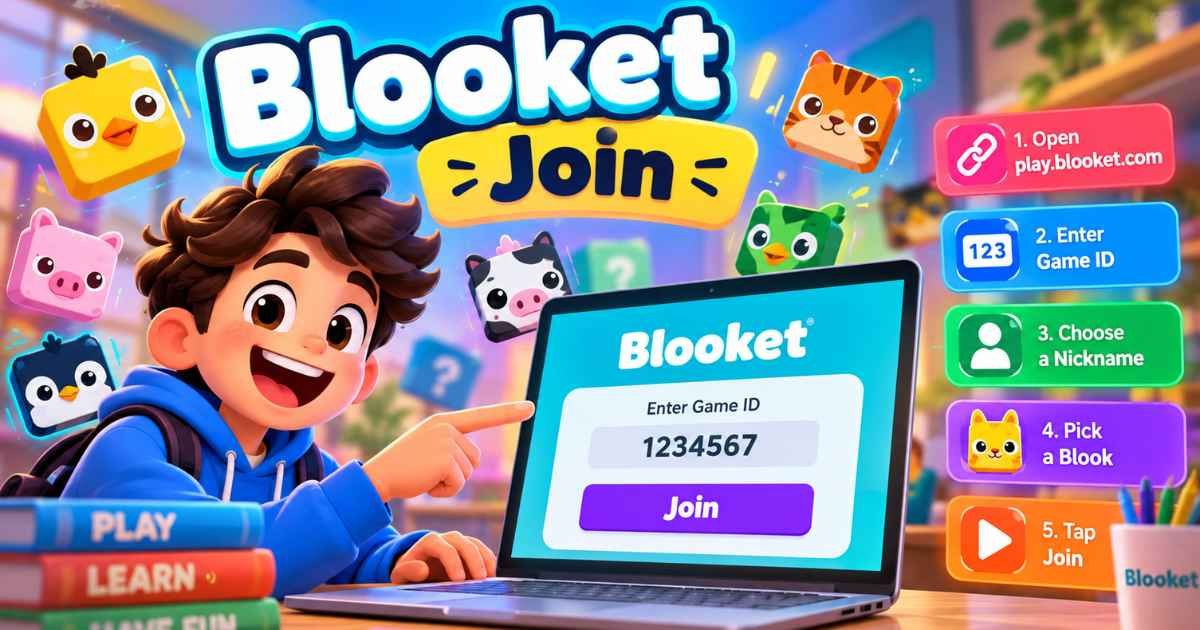
After submitting the information, wait for the game to respond. If the session is active and the details are accepted, you should be able to proceed into the lobby or game environment. Follow any additional instructions displayed on the screen. The host may need to start the activity before questions appear, so remaining in the waiting area for a short time can be normal.
If the platform rejects the code, avoid repeatedly entering random numbers. Confirm that the host has started the session and is still allowing players to join. Ask for a fresh code if necessary. These simple checks can resolve many common access issues without requiring complicated troubleshooting.
Common Blooket Joining Problems and Their Solutions
Players may occasionally encounter errors when attempting to enter a live session. These issues can result from an expired code, an incorrectly entered number, a connection problem, or restrictions configured by the host. Identifying the likely cause helps participants respond appropriately instead of assuming the platform is completely unavailable.
The following table summarizes common problems and practical solutions.
| Problem | Possible reason | What to do |
|---|---|---|
| Invalid code message | Incorrect or expired code | Confirm the code with the host |
| Game unavailable | The session has ended | Ask whether a new game is active |
| Joining option fails to load | Browser or network issue | Refresh the page and check connectivity |
| Cannot enter the lobby | Host settings or participation limit | Ask the host whether joining is still open |
| Game loads slowly | Weak connection or device performance | Close unnecessary tabs and retry |
Fixing Browser and Connection Issues
When the joining code appears correct, check whether your internet connection is working normally. A weak or unstable connection may prevent the game page from loading properly or interrupt the joining process. Switching to a more reliable network, when available and permitted, can help identify whether connectivity is the problem.
Refreshing the page may also resolve a temporary loading issue. Before doing so, make sure you have the correct code available so that you can try again if necessary. If the problem continues, consider closing unnecessary browser tabs or restarting the browser. Using an updated browser can also improve compatibility with interactive websites.
If several students experience the same problem at the same time, the issue may not be limited to an individual device. In that situation, the host can check the session settings and determine whether the activity needs to be restarted. Students should follow the teacher’s instructions rather than attempting unrelated workarounds.
Different Ways Blooket Supports Interactive Learning
Blooket is designed to make answering questions feel more like participating in a game than completing a conventional worksheet. Depending on the available options and host settings, a quiz can be paired with different game experiences. Players may need to answer correctly, manage resources, compete against others, or complete objectives while demonstrating their understanding of the subject.
This approach can make revision sessions more engaging because students receive a clear activity to focus on. For example, a teacher reviewing vocabulary might prepare questions about definitions, spelling, and sentence usage. Students answer the questions during a game, allowing the teacher to observe participation and identify concepts that may require further explanation.
Game-based activities can also introduce a sense of friendly competition. However, competition is not the only benefit. Students who are less comfortable speaking in front of the class may find it easier to participate by answering questions on their devices. Teachers can adjust the activity to suit the classroom, balancing speed, accuracy, cooperation, and understanding.
It is important to remember that the effectiveness of a learning game depends on the quality of its questions and how the activity is used. A colorful interface alone does not guarantee better learning. Students benefit most when gameplay is followed by explanations, discussion, and opportunities to correct mistakes.
Tips for a Better Blooket Joining Experience
A few simple habits can make joining a live activity smoother. Students should keep the joining instructions visible, enter the code carefully, and wait for the host to confirm that the session is ready. Preparing the device before the lesson starts can also reduce delays, particularly when a class has a limited amount of time for the activity.
The following practices are especially useful:
- Obtain the joining code directly from the host whenever possible.
- Check every digit before submitting the code.
- Use a stable internet connection and a compatible, updated browser.
- Follow classroom rules when choosing a display name.
- Ask the host for help if the session is unavailable or the code fails.
Students should also avoid opening multiple unfamiliar pages while trying to find a game. Random websites claiming to provide guaranteed access to private or active sessions may be outdated or misleading. A legitimate session still requires an available game and a valid joining method.
Teachers can improve the experience by displaying the code clearly, explaining the joining process before starting the timer, and allowing students a brief opportunity to enter the lobby. Providing instructions in advance is particularly helpful when some students are unfamiliar with the platform or are using smaller mobile screens.
Is It Safe to Use Publicly Shared Blooket Codes?
Online discussions sometimes contain codes that people describe as active or available for anyone to use. However, public availability does not guarantee that a code works, that the session is still running, or that the host intended it for a particular audience. Many codes are temporary, and an apparently valid code may stop working before someone attempts to use it.
For classroom activities, obtaining the code from the teacher is the most dependable approach. This ensures that students are joining the intended session rather than an unrelated game. It also helps teachers manage participation and maintain a suitable learning environment.
Privacy deserves attention as well. Players should avoid sharing passwords, personal contact information, or other sensitive details on unfamiliar pages. A joining code should not be confused with an account password, and students should never provide account credentials to a third-party service that claims to unlock special games.
Parents and teachers can help younger learners understand these basic precautions. If a page makes unrealistic promises, requests unnecessary personal information, or encourages users to install unfamiliar software just to enter a quiz, it is sensible to leave that page and return to the trusted platform.
Why Teachers Use Blooket in the Classroom
Teachers often look for methods that encourage participation without making every lesson feel repetitive. Blooket can provide an alternative format for reviewing material, checking understanding, and encouraging students to engage with questions. Because the activities can be adapted to different subjects, teachers may use them for language learning, mathematics, science, history, or general knowledge.
Consider a mathematics lesson about fractions. A teacher can prepare questions that ask students to identify equivalent fractions, compare values, or solve simple problems. During the game, students practise recognizing the correct answers. The teacher can then revisit questions that many participants found difficult and explain the underlying concepts in greater detail.
A similar approach works for vocabulary revision. Students might match words with meanings or identify appropriate terms in example sentences. Repeated exposure to carefully designed questions can support recall, while the game format may help sustain attention during a short review session.
Teachers should nevertheless consider differences in student needs, internet access, reading speed, and device availability. A student who answers more slowly may understand the material just as well as someone who responds quickly. Providing enough time and using game results as one source of feedback can make the activity more inclusive and educationally valuable.
What to Know Before Searching for Blooket Codes to Join
Before looking for blooket codes to join, it helps to understand the difference between a live session code and a general invitation to use an educational platform. A session code is associated with a particular game, while access to the platform itself does not mean that every live activity is available at all times. Players still need the correct joining information for the session they want to enter.
It is also useful to check the timing of the activity. A teacher may create a game for a specific class period, meaning that the code is relevant only while the session remains available. If you find an older code in a discussion or video, there may be no reliable way to determine whether it is still active without checking with the original host.
Students who want to practise independently should ask a teacher whether an appropriate practice activity is available or explore the platform’s supported study options. This is more dependable than repeatedly trying codes from unrelated sessions. It also keeps the focus on learning rather than spending time searching for games that may no longer exist.
Conclusion
Blooket makes classroom revision more interactive by combining questions with game-based activities. Understanding how joining codes work allows students to enter live sessions more confidently, while teachers can use the platform to support participation, review key concepts, and identify areas that need further explanation. The most important step is to obtain a valid code from the person hosting the game. Enter it carefully, check that the session is still active, and follow the instructions provided on the screen. When a code fails, confirm its accuracy, review your connection, and ask the host whether the game is still accepting participants. Ultimately, blooket codes to join are a practical way to connect participants with live educational games, but they are not permanent keys to every session. Using the correct code, following basic online safety practices, and approaching each activity as a learning opportunity can help students enjoy a smoother and more productive experience. With thoughtful preparation from both teachers and students, game-based quizzes can become a useful addition to classroom learning and revision.


.webp&description=Learn how Blooket codes to join work, how to enter live classroom games, troubleshoot invalid codes, and enjoy interactive learning with friends.)