

Blooket has become a popular way to make classroom review sessions more interactive by combining educational questions with game-style competition. Instead of simply answering questions on a worksheet or listening to a traditional review lesson, students can participate in a live game where their answers influence their progress. One of the simplest ways to enter these sessions is through blooket codes, which connect players to a specific hosted game.
The basic idea is straightforward. A teacher or host starts a Blooket game and provides students with a code. Players enter that code in the appropriate joining area, provide the requested player information, and wait for the host to begin. Once the game starts, participants answer questions while interacting with the selected game mode. This process makes classroom revision feel more like an activity than a conventional test.
Understanding how these codes work is useful for both students and teachers. Students can join sessions more confidently when they know what information is required, while teachers can organize games more efficiently by understanding the relationship between question sets, game modes, and live participants.
What Are Blooket Codes?
Blooket codes are temporary game-access codes used to help players enter a live Blooket session. When a host creates and launches a game, the platform can provide a code that participants use to identify that particular session. The code essentially acts as a doorway into the active game rather than being a permanent password for a specific account or classroom.
The important point is that a code is generally associated with a particular game session. A code that worked during one classroom activity may not necessarily work for a different session later. This is why students should normally use the code provided by their teacher, instructor, or current game host instead of relying on an old code they found elsewhere.
For students, the process is intentionally simple. The host supplies the current code, participants enter it through the joining process, and they select a player name when prompted. After successfully joining, they typically wait in the game lobby until the host starts the activity.
How Do Blooket Codes Work?
The process behind blooket codes is designed around live game sessions. A teacher first selects or prepares a question set and then chooses a game mode suitable for the activity. After launching the session, the host provides students with the information needed to join. Students then enter the current code and appear in the host’s game environment.
Once participants have joined, the host can monitor the lobby before starting the game. This gives teachers an opportunity to make sure the expected students are present and that everyone understands the basic instructions. Depending on the selected game mode, students may then compete individually or participate in a format where their performance affects a larger in-game objective.
The code itself does not determine the questions students will receive. Instead, it helps connect players with the appropriate live session. The questions, rules, scoring system, and gameplay experience are influenced by the host’s selected settings and game mode.
How Students Can Join a Blooket Game
Joining a live game is usually quick, but students sometimes become confused because they search for a permanent code rather than asking for the code associated with the current session. Since live games are controlled by their hosts, the safest approach is to use the information supplied by the teacher or session organizer.
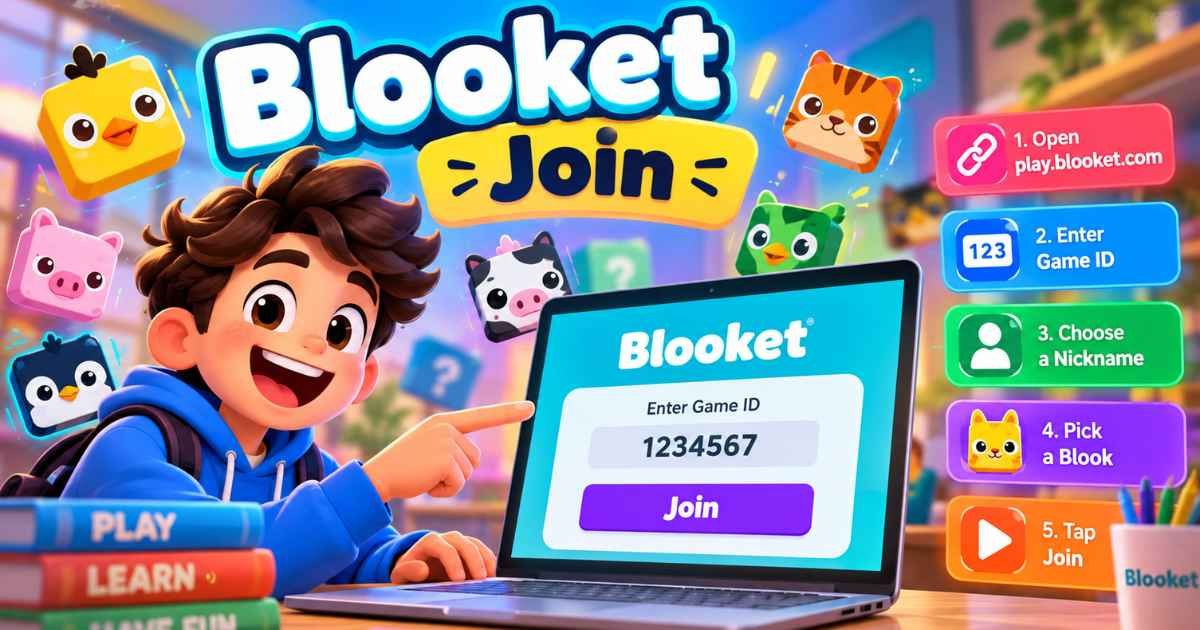
A typical joining process involves these steps:
- Receive the current game code from the host.
- Enter the code in the Blooket joining area.
- Choose an appropriate player name when requested.
- Wait for the host to begin the game.
After joining successfully, students should avoid refreshing the page unnecessarily or leaving the session unless instructed to do so. If the game has already started, joining may depend on the host’s settings and the particular game mode being used.
Why a Code May Not Work
There are several ordinary reasons why a student might have trouble joining. The most common explanation is that the session has ended or the code is no longer active. Since live sessions are temporary, an older code may not provide access to a current game.
Another possibility is a typing mistake. Codes can be entered incorrectly when students are working quickly, particularly if they copy the number from a classroom screen or another student. Checking the characters carefully can solve a surprisingly large number of joining problems.
Internet connectivity can also affect the experience. If the student’s browser connection is unstable, the joining page may fail to load correctly or the player may be disconnected after entering the session.
Blooket Codes and Classroom Learning
The educational value of a live game depends largely on how the teacher uses it. A game can be entertaining, but its strongest classroom benefit comes from connecting gameplay with a meaningful learning objective. For example, a teacher reviewing vocabulary can use questions that reinforce definitions, spelling, usage, and contextual understanding.

Similarly, a mathematics teacher might use a game to review calculations before an assessment. Rather than spending the entire lesson explaining individual questions, the teacher can observe common mistakes and use the results to identify topics that require additional instruction.
This makes game-based learning particularly useful as a review technique. Students receive repeated exposure to concepts while remaining engaged with the activity. The competitive element can also encourage students to pay closer attention, although teachers should ensure that competition remains positive and does not discourage students who need more time.
Different Ways Teachers Can Use Live Games
Blooket can support several classroom situations beyond simple test preparation. A teacher may use a short game at the beginning of a lesson to determine how familiar students already are with a topic. The results can then help shape the remainder of the lesson.
Another effective approach is using a game near the end of a teaching unit. Students can review important concepts while the teacher observes which questions produce the most incorrect answers. Instead of treating the game purely as entertainment, the activity becomes another form of classroom feedback.
Teachers can also use different game formats to change the experience. Some activities emphasize individual performance, while others introduce additional game mechanics that make students think strategically. The right choice depends on the age of the students, the subject being taught, and the purpose of the activity.
Blooket Codes Compared With Traditional Classroom Review
Traditional review methods still have an important role in education, but interactive games can provide a different learning environment. A worksheet generally requires students to work through questions one at a time, while a live game introduces immediate interaction and a visible sense of progress.
| Learning Approach | Main Advantage | Best Use |
|---|---|---|
| Traditional worksheet | Detailed individual practice | Homework and independent review |
| Classroom discussion | Direct explanation and feedback | Understanding difficult concepts |
| Live Blooket game | Interactive practice and engagement | Revision and formative assessment |
| Practice quiz | Structured assessment | Checking individual knowledge |
The strongest classroom strategy does not necessarily involve choosing one method over another. Teachers can combine approaches so that students first learn a concept, practice it independently, discuss difficult areas, and then participate in an interactive review activity.
How Teachers Can Create Better Blooket Sessions
A successful game begins with good questions. Teachers should avoid creating questions simply to fill a game. Each question should have a clear connection to the learning objective. Questions can include straightforward recall, but adding application and reasoning questions can make the activity more educationally valuable.
Question difficulty also matters. If every question is extremely easy, students may become bored. If every question is highly difficult, the game can become frustrating. A mixture of familiar, moderate, and challenging questions can create a more balanced experience.
Teachers should also consider the length of the activity. A short review game can work well when students are transitioning between lessons, while a longer session may be appropriate for a dedicated revision period. The goal should be to maintain engagement without allowing the game mechanics to overshadow the educational purpose.
Common Problems Students Experience
Students may encounter several technical or practical issues while trying to participate. Sometimes the problem is simply an incorrect code. In other cases, the session may have closed before the student attempted to join. Classroom internet networks can also introduce connectivity problems, particularly when many devices are attempting to access the same online activity simultaneously.
Another issue can involve player names. Teachers may have classroom rules about appropriate names, and some sessions may use settings that affect how players appear within the game. Students should therefore follow their teacher’s instructions rather than experimenting with disruptive or inappropriate names.
A useful troubleshooting approach is to first confirm that the code is correct, then check the internet connection and browser. If the problem continues, asking the host for a fresh code or additional instructions is usually more productive than repeatedly attempting to use an old session code.
Tips for Using Blooket Codes Effectively
For students, the most important habit is to use the current code provided for the specific game. Searching random codes online can be unreliable because live game codes can expire, change, or stop accepting new players. A code’s existence does not necessarily mean that a playable public session is currently available.
For teachers, communicating the code clearly can make the beginning of a session much smoother. Displaying it prominently and giving students a moment to enter it before starting the game can reduce confusion. Teachers can also establish expectations about usernames, participation, and appropriate behavior before launching the activity.
A few practical habits can improve the overall experience:
- Share the code only when the session is ready for students.
- Give participants enough time to join before starting.
- Explain the rules and learning objective before gameplay.
- Review difficult questions after the game finishes.
- Use results as feedback rather than relying only on rankings.
Why Game Codes Are Useful for Group Activities
The convenience of blooket codes comes from the fact that they reduce the amount of setup required for participants. Instead of individually configuring a game on every device, students can use the session information supplied by the host and enter the activity together.
This is especially useful in classrooms where many students need to join within a short period. Once everyone is connected, the teacher can focus on instruction and classroom management rather than spending a large portion of the lesson helping students configure the activity.
The same concept can also work for informal study groups. Students reviewing a subject together can participate in a shared activity and discuss questions afterward. However, the usefulness of the session still depends on having an active host and an appropriate question set.
Understanding the Difference Between Codes and Question Sets
A common misunderstanding is treating the game code and the question set as the same thing. They serve different purposes. The question set contains the educational material, while the game session determines how participants interact with that material.
For example, a teacher could use the same collection of questions in different sessions while changing the game format or adjusting other settings. Each new live activity can have its own joining information even though the underlying educational content remains similar.
This distinction is important because it explains why finding an old code does not necessarily give someone access to the questions they expect. The active session and its settings determine what happens after the participant joins.
The Future of Interactive Classroom Review
Game-based learning continues to develop as schools and educators look for ways to keep students engaged while collecting useful feedback. Platforms such as Blooket fit into a wider movement toward interactive digital learning, where students are not simply passive recipients of information.
The most effective use of these platforms will likely remain centered on balance. Technology can make practice more engaging, but it works best when combined with explanation, discussion, independent work, and teacher feedback. A game should support learning rather than replace the teaching process itself.
As digital classrooms become increasingly common, simple tools that allow groups to participate together can remain valuable. The ability to quickly organize a session, share joining information, and turn review questions into an interactive experience gives teachers another flexible option for classroom instruction.
Conclusion
Blooket codes provide a simple way for students to enter live educational game sessions created by a teacher or other host. Their primary purpose is to connect participants with an active game, while the question set, selected game mode, and host settings determine the actual learning experience. Because live codes are associated with particular sessions, students should rely on the current information supplied by their host rather than assuming that an old code will continue working. When used thoughtfully, interactive games can make revision more engaging without sacrificing educational value. Teachers can create meaningful question sets, choose suitable game formats, observe student performance, and use the results to identify areas that need further explanation. Students, meanwhile, can benefit from repeated practice in a more energetic environment.


.webp&description=Learn how Blooket codes work, how to join live games, what students need to know, and how teachers can create engaging classroom sessions.)