

Online learning has become more interactive as teachers and students increasingly use educational games to make lessons enjoyable. Blooket is one such platform that combines quizzes, competition, and colorful characters to create an engaging learning experience. Instead of simply answering questions on a worksheet, students can participate in game-based activities, compete with classmates, and review important concepts in a fun environment. One of the most important parts of this experience is understanding how players enter a live session.
Blooket codes are session-specific identification numbers that allow players to join a game hosted by a teacher or another authorized host. These codes connect participants to the correct live activity without requiring them to search through a list of games. However, not every code remains usable indefinitely. A code generally works only while its associated session is available, and players may encounter expired codes, waiting rooms, or other joining issues.
Understanding how these codes work can save time for students, parents, and teachers. Whether someone is preparing for a classroom quiz, joining a revision activity, or learning about the platform for the first time, knowing the correct joining process makes the experience smoother. This guide explains the purpose of session codes, how to use them, where to obtain them, and what to do when something goes wrong.
What Are Blooket Codes?
Blooket codes are numbers generated for particular live game sessions. When a host starts a compatible game, the platform provides a session code that participants can use to enter that activity. The code acts as a connection between the host’s game and the players who want to participate. Once a player enters the correct information, they can usually proceed to the available joining screen and select an appropriate display name.
These codes are especially useful in classrooms because they allow an entire group to join the same activity quickly. For example, a teacher might prepare a science quiz about the solar system and start a game during a lesson. Students can enter the session code on their devices and participate in the same activity. Their answers and progress are then handled according to the selected game mode and its rules.
It is important to distinguish a live session code from a permanent access code. A session code is not necessarily a reusable password for a particular quiz, nor does it guarantee that a game will remain available. Its usefulness depends on the session created by the host. If the host ends the activity or the session becomes unavailable, players may need a new code to participate again.
How to Join a Blooket Game Using a Code
Joining a live game is generally straightforward when the host has already started the session and shared the correct code. Players need a compatible device, an internet connection, and the information supplied by the host. A phone, tablet, Chromebook, or computer can be suitable, depending on the platform’s current requirements and the browser being used.
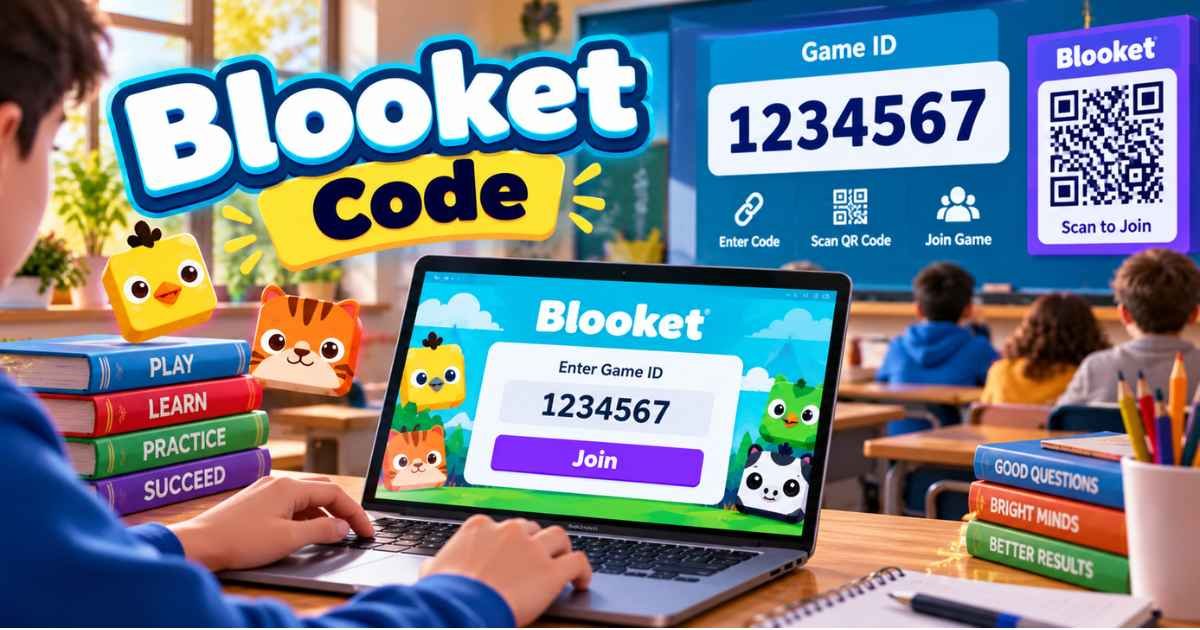
The joining process usually begins by opening Blooket’s official game-joining page through a browser or following the instructions provided by the teacher. The player enters the session code in the designated field and submits it. If the session is active and the code is correct, the player can follow the on-screen instructions to enter the game. Depending on the host’s settings, a display name or additional confirmation may be required before participation begins.
Students should pay attention to the instructions displayed after entering the code. Some hosts may need to approve participants, while others may allow players to enter directly. A player who joins successfully might need to wait until the host starts the activity. Entering the game does not always mean the quiz will begin immediately, because the host may be waiting for other participants.
For the best experience, players should avoid refreshing the page unnecessarily while waiting for the game to start. They should also ensure that they have entered the complete code correctly. If the session cannot be found, asking the host to confirm the code is usually more effective than repeatedly trying random numbers.
Where Can You Find Active Game Codes?
The most reliable place to obtain a valid session code is directly from the person hosting the game. In a classroom, this is usually the teacher. During a group revision session, it may be the person organizing the activity. The host creates or starts the session and shares the relevant code with participants.
Teachers may display the code on a classroom screen, write it on a board, or distribute it through an approved class communication channel. Online instructors may provide it during a video lesson or in the instructions for a scheduled activity. In each case, the important point is that the code should correspond to a session that is actually available for players to join.
Searching for publicly posted codes can be confusing because codes associated with previous sessions may no longer work. A number shared in an old discussion, video, or social media post does not necessarily represent a currently active game. Even if it resembles a valid session code, it cannot be assumed to connect to an available activity.
Players should also avoid websites or individuals that promise guaranteed access to private games, unlimited sessions, or special rewards in exchange for personal information. A legitimate session code is intended to help players enter a game, not to provide access to someone else’s account. When in doubt, requesting a fresh code from the host is the safest and simplest solution.
Why Some Blooket Codes Do Not Work
There are several reasons why a player might be unable to join a game. The most common explanation is that the session has ended or is no longer available. Since session codes are connected to particular games, an old code may become useless once the host closes the activity. A player who finds a code in an older post may therefore discover that it does not lead to a playable session.
Another possibility is a typing mistake. A missing digit or an incorrectly entered number can prevent the platform from recognizing the session. Players should carefully compare the number they entered with the one displayed by the host. If the code was shared verbally, asking the host to repeat it can help eliminate confusion.
Internet connectivity and browser problems can also interfere with joining. A weak connection may prevent the joining page from loading properly, while an outdated browser or temporary technical issue may cause unexpected behavior. In these situations, checking the connection, reloading the page once, or trying an updated browser may resolve the problem.
The following table summarizes common joining issues and practical ways to address them.
| Problem | Possible reason | Suggested solution |
|---|---|---|
| Code is rejected | Incorrect or expired code | Confirm the code with the host |
| Page does not load | Connection or browser issue | Check the internet connection and retry |
| Game does not begin | Host has not started the activity | Wait for the host’s instructions |
| Player cannot enter | Session settings or access restrictions | Ask the host to check the session |
| Joining process freezes | Temporary technical problem | Refresh once and try again |
Not every issue can be solved from the player’s side. If the code is correct but the game remains inaccessible, the host may need to restart the activity or provide another session code. Following the host’s instructions is generally the most efficient way to resolve access problems.
Different Ways Teachers Use Blooket in Classrooms
Blooket can support several types of classroom activities, depending on the available game modes and the teacher’s objectives. One common use is reviewing material that students have already learned. A teacher might prepare questions about mathematics, geography, grammar, or science and use a game session to help students remember key facts. The competitive format can encourage participation while giving the teacher an opportunity to identify concepts that need further explanation.
Another useful application is introducing a topic through a short knowledge check. Before beginning a lesson about ecosystems, for example, a teacher could ask questions about food chains, habitats, and biodiversity. Student responses can help reveal what the class already understands. The teacher can then adjust the lesson to focus on areas where learners need more support.
Teachers can also use games as a way to break up longer lessons. A short quiz after a demanding explanation may provide a welcome change of pace without abandoning the educational objective. However, game-based activities work best when their questions are relevant to the subject and their difficulty matches the students’ learning levels.
The session code makes participation convenient, but the quality of the learning experience depends on more than access alone. Clear instructions, suitable questions, fair competition, and a brief discussion of incorrect answers can turn a quick game into a valuable learning activity.
Tips for a Smooth Blooket Joining Experience
Players can reduce common problems by preparing before the activity begins. Having the correct code ready, using a reliable internet connection, and following the host’s instructions can prevent unnecessary delays. Students should also make sure they are joining the intended session rather than entering information from an unrelated game.
A few simple habits can make the process easier:
- Obtain the code directly from the current host whenever possible.
- Enter the complete number carefully and check it before submitting.
- Keep the joining page open while waiting for the host to begin.
- Use an appropriate display name that follows classroom rules.
- Ask the host for assistance if the code repeatedly fails.
Privacy and responsible participation are important as well. Students should avoid sharing private classroom information publicly or using another participant’s identity. They should also be cautious about websites claiming to generate working session codes automatically. Such claims do not establish that a real game exists or that the advertised service is trustworthy.
A successful joining experience should be simple and predictable. Players who use the correct session information and communicate with the host are much less likely to waste time on codes that cannot work.
Can You Reuse an Old Blooket Code?
Whether a code can be used again depends on the session associated with it. A code belonging to an ended game should not be expected to work for a future activity. Starting a new session may produce a different code, even when the host uses similar questions or selects the same game mode.
This distinction matters because players sometimes assume that a code shared during a previous class will remain valid. For example, a teacher might run a history quiz on Monday and organize another quiz on Wednesday. Even if the two activities cover the same chapter, the second session may require a new code. The previous number is not a permanent identifier for that subject or quiz.
If an old code fails, players should not assume that their account or device is broken. The first step is to ask whether the original session is still active. If it has ended, the host can start another game and provide the updated information. This approach is more dependable than searching through old posts or repeatedly attempting to enter an unavailable session.
Blooket Codes and Safe Online Gaming Habits
Educational gaming should remain a positive and secure experience. Although joining a session typically requires only a code and the information requested by the platform, users should still pay attention to privacy. They should avoid entering account credentials on unfamiliar pages that imitate an educational gaming service. A session code alone should not be treated as a reason to disclose passwords, payment information, or other sensitive details.
Students should also respect the rules established by teachers and game hosts. Using an appropriate name, answering questions honestly, and avoiding disruptive behavior help keep activities enjoyable for everyone. If a session is intended for a particular classroom, its code should not automatically be considered an invitation for unrelated participants to join.
Parents can support younger learners by explaining the difference between an official game session and an unfamiliar website that advertises access to games. They can also encourage children to ask a trusted adult before sharing personal information online. These basic habits are useful across educational platforms, not just during quiz activities.
When participants combine safe browsing with responsible behavior, game-based learning can provide an engaging way to practice concepts, collaborate with classmates, and build confidence.
Conclusion
Blooket makes classroom learning more interactive by combining questions, game mechanics, and friendly competition. Understanding how session codes work helps students join the correct activity without unnecessary confusion. The key is to use the current information supplied by the host, enter it carefully, and follow the instructions displayed during the joining process. Blooket codes are tied to individual game sessions, so their availability depends on whether the corresponding activity is still active. An old code may no longer work, while a fresh code from the teacher can provide access to a new session. Checking for typing errors, maintaining a reliable internet connection, and asking the host for assistance are practical ways to resolve most common joining problems. Ultimately, the purpose of these codes is to make participation easier, not to guarantee access to every game or provide permanent entry to a session. By obtaining codes from trusted sources, protecting personal information, and following classroom rules, students and teachers can make educational gaming more useful, enjoyable, and productive.