

A Blooket game code is a temporary code that allows players to join a live game session created by a host. Instead of searching through different activities or trying to find a particular classroom manually, players can enter the code provided by the host and connect to the correct game. This simple joining system is one of the reasons Blooket has become popular for classroom quizzes, review activities, and interactive learning sessions.
For students, understanding how game codes work can make joining a session much easier. A teacher or host normally creates a game, selects an appropriate question set and game mode, and then starts a live session. Once the session is ready, players receive the joining information. The code connects participants to that specific session, while the host remains responsible for controlling the activity.
The concept is straightforward, but there are still situations where students may become confused. A code might stop working, a session may already be closed, or a player may accidentally enter an incorrect code. Knowing what the code represents and how live sessions operate can prevent many of these problems.
What Is a Blooket Game Code?
A blooket game code is a short joining code generated for a particular live game session. It works as a temporary identifier that helps the platform determine which active game a player wants to enter. The code itself does not represent a permanent game or a particular question set. Instead, it is associated with the live session that the host has started.
This distinction is important because beginners sometimes assume that one code will continue working indefinitely. In reality, live-game codes are connected to individual sessions. When a host finishes or closes a session, the associated joining information may no longer work. A different session created later can have a different code, even if the host uses the same question set.
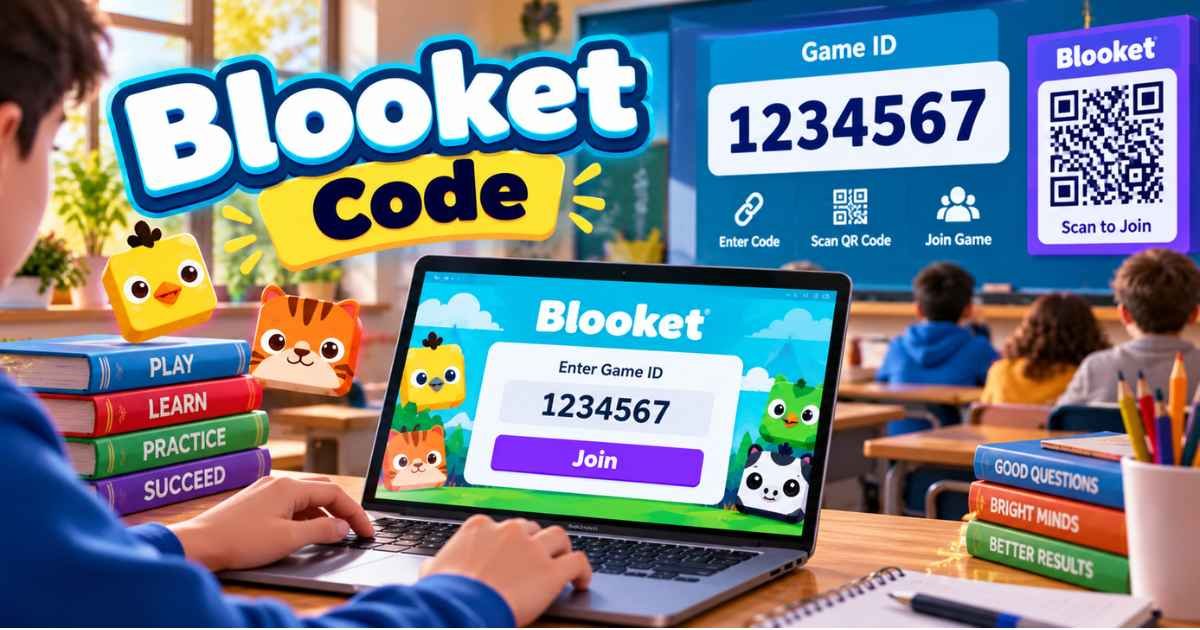
The system is designed to make classroom participation convenient. A teacher can display the joining information on a classroom screen while students enter it on their own devices. Once participants are connected, the host can begin the activity and monitor the game from the host interface.
How Does a Blooket Game Code Work?
When a host creates a live activity, the platform establishes a session for participating players. The host then shares the relevant joining information with the class. Students use that information to reach the appropriate game session rather than attempting to locate it manually.
The code essentially acts as a bridge between the player and the active session. A student who enters the correct code can proceed through the joining process, usually by selecting or entering a player name as requested. The host can then see participants appearing in the session and decide when everyone is ready.
Because the code belongs to a live session, timing matters. If a student receives an old code from a previous activity, it may not work. Similarly, if the host has not started a live game yet, there may not be an active session for the code to connect to. This is why students should generally use the code supplied by their teacher or current host rather than relying on codes found elsewhere.
How to Join a Live Blooket Game
Joining a live game is normally a quick process. The host first prepares the activity and starts the session. Players then use the designated joining area and enter the code supplied by the host. After the code is accepted, the player can follow the remaining instructions displayed on the screen.
A typical joining process involves these basic steps:
- Open the Blooket joining page or appropriate game interface.
- Enter the current code provided by the host.
- Choose a player name according to the session rules.
- Wait for the host to begin the game.
The important point is that players need the current code for the specific session. Searching randomly for codes is usually less useful than simply asking the teacher or host for the active code. This also reduces confusion when several games are taking place at the same time.
Why Game Codes Are Useful for Classrooms
Game codes make classroom activities easier to organize because teachers do not need to manually add every student to a session. Instead, students can join independently using the information shown by the host. This is particularly useful in classrooms where many students need to participate simultaneously.
The approach also gives teachers greater control over the activity. The host determines the question set, game mode, and session settings before students join. Once the activity begins, students can focus on answering questions and participating in the selected game experience.
Another advantage is accessibility across different devices. Depending on the classroom setup, students may participate using computers, tablets, or other supported devices. This flexibility can make interactive review activities more practical than traditional paper-based exercises.
Understanding Different Types of Blooket Sessions
Not every Blooket activity works exactly the same way. The experience can vary according to the game mode selected by the host, the type of question set being used, and the settings applied to the session. Some activities may emphasize speed, while others may introduce game mechanics that make the learning experience more strategic.
The game code itself does not determine all of these features. Instead, it connects players to the session that the host has already configured. This means two different codes can lead to completely different activities, even though players use the same general joining process.
Game Mode and Player Experience
The selected game mode can significantly influence how students interact with questions. In one activity, students may answer independently and compete based on their performance. In another, game mechanics can introduce additional decisions beyond simply answering questions correctly.
This variety is one reason Blooket can feel different from a conventional quiz platform. Students are not always focused solely on a score shown after each question. Depending on the mode, they may also interact with virtual rewards, strategies, or other game elements.
Common Problems When Entering a Game Code
Although joining is generally simple, technical or session-related problems can occur. One common issue is entering the wrong characters. Since the code needs to match the active session, even a small mistake can prevent successful entry.
Another possibility is that the host has ended the session. A code that worked earlier may no longer be useful once its corresponding activity has finished. Students can also encounter problems when they receive information from an outdated message, screenshot, or previous classroom session.
Here are some practical checks when a code does not work:
- Confirm that every character in the code was entered correctly.
- Ask the host whether the session is still active.
- Check that the correct joining area is being used.
- Refresh the page if the session appears stuck.
If these checks do not solve the problem, the host can usually determine whether the issue is with the session itself or with an individual player’s device.
Blooket Game Code vs. Question Set
One of the most important distinctions for beginners is the difference between a game code and a question set. A question set contains the educational questions that will be used during an activity. A game code, on the other hand, identifies a particular live session in which those questions are being presented.
This means a question set can potentially be used again in another session. When the host starts another activity using that same content, the new session can have different joining information. Students therefore should not assume that a code is a permanent shortcut to a particular quiz.
| Feature | Game Code | Question Set |
|---|---|---|
| Main purpose | Connects players to a live session | Provides questions for an activity |
| Created for | A particular session | Reusable learning content |
| Changes between sessions | Usually can change | Can remain available for reuse |
| Used by | Players joining the session | Host and players during gameplay |
Understanding this difference makes the entire platform easier to navigate. Students only need the current joining information, while teachers can focus on selecting and preparing suitable educational content.
Why Students Search for Game Codes
Students may search for a blooket game code because they want to join an active game quickly. However, a code found online is not necessarily useful. Since codes are associated with particular sessions, an old code may have expired or no longer correspond to an active game.
In a classroom environment, the most reliable source is the person hosting the activity. Teachers can provide the current code directly, usually when everyone is ready to join. This eliminates uncertainty and ensures that students are attempting to enter the correct session.
Publicly shared codes can also create confusion. If many people attempt to enter a private classroom session, the host may have difficulty identifying participants. For organized classroom activities, students should follow the participation instructions given by their teacher rather than joining unrelated sessions.
Tips for a Better Blooket Experience
A smooth game experience depends on more than having the correct code. Players should make sure their device is connected to a stable internet connection and that they are using an updated browser or supported environment. If a page loads slowly, refreshing it can sometimes resolve temporary problems.
It is also helpful to listen carefully when the host explains the rules. Some sessions may have specific requirements for player names, joining times, or participation. Following those instructions prevents unnecessary interruptions and allows the game to begin on time.
For teachers, preparation is equally important. Testing the activity before class, choosing suitable question content, and explaining the joining process can make the session more efficient. When students know exactly what to do, less classroom time is spent troubleshooting basic problems.
Using Game Codes Responsibly
Game codes should be treated as session-specific joining information rather than permanent passwords. Students should avoid attempting to disrupt activities or entering sessions they have not been invited to join. Responsible participation helps maintain a positive environment for both teachers and other players.
Teachers can also establish simple classroom rules around player names and participation. Clear expectations reduce distractions and make game-based learning more productive. The purpose of a live quiz is ultimately to reinforce learning, not simply to compete for a high score.
This is especially relevant when game-based learning is used regularly. When students understand that the game is part of an educational activity, they are more likely to focus on the questions and learning objectives rather than treating the session only as entertainment.
The Educational Value Behind Game-Based Quizzes
The popularity of Blooket-style activities comes from combining familiar quiz questions with interactive game mechanics. Traditional quizzes can sometimes feel repetitive, particularly when students answer a long series of questions without additional interaction. Game-based formats can introduce another layer of engagement.
A well-designed session can encourage students to recall information, recognize mistakes, and remain attentive throughout an activity. Teachers can use these sessions as revision exercises, informal assessments, warm-up activities, or end-of-class reviews.
However, game mechanics should support the learning objective rather than replace it. The quality of the questions remains important. A fun game with poorly designed questions may produce excitement without delivering meaningful educational value. The strongest classroom sessions balance engaging gameplay with useful academic content.
What Happens After a Game Ends?
Once the host finishes a live activity, players generally cannot continue using the same session as though it were still active. This is another reason students should not expect an old code to work whenever they want.
If the teacher creates another session later, new joining information may be provided. The content can sometimes remain similar, but the live session itself is separate. Students should therefore pay attention to the information provided for each new activity.
This session-based approach also helps hosts manage different classes or groups. A teacher can organize separate activities for different groups without relying on one permanent joining code for every situation.
Conclusion
A blooket game code is essentially a convenient way for players to connect with a specific live game session. The code does not permanently represent a quiz or question set; instead, it helps direct participants toward the active session created by the host. Once students understand this distinction, joining games becomes much easier. The best approach is to use the current code provided by the teacher or authorized host, enter it carefully, and follow the session instructions. If the code does not work, checking for typing mistakes, confirming that the session is active, and asking the host for the latest information can resolve most basic problems.