

Interactive learning has changed the way students participate in classroom activities, and quiz-based platforms have become especially popular for making lessons more engaging. Blooket combines questions, competition, and game-based rewards to create an experience that feels different from a traditional worksheet or quiz. One of the simplest ways to participate in a hosted Blooket game is through blooket codes, which allow players to enter a live session created by a teacher or another host.
A game code is generally used as a temporary access key for a particular live session. Instead of searching through a large collection of activities, players can enter the code provided by the host and join the appropriate game. This makes the process convenient for classrooms, study groups, review sessions, and friendly competitions. However, understanding what codes do, how they are shared, and why some codes stop working can make the overall experience much smoother.
What Are Blooket Codes?
Blooket codes are numerical game identifiers that players can use to join a live Blooket session. When a host starts a game, the platform can provide a code associated with that particular session. Players enter the code through the joining interface, usually along with a nickname, to connect to the game. The code itself does not represent a permanent game or universal password. It is connected to a specific session and therefore may only work while that session is available.
This distinction is important because players sometimes assume that any code found online should continue working indefinitely. In practice, live game codes can become unavailable when a host ends a session, changes the activity, or starts another game. A code that worked earlier may therefore fail later without there being a problem with the player’s device. The most reliable source of a current code is the person hosting the game.
How Do Blooket Codes Work?
When a teacher or host prepares a Blooket activity, they select an appropriate question set and choose a game mode. Once the session begins, players can be invited to participate. The host then provides the game code to the intended players, often by displaying it on a classroom screen, announcing it verbally, or sharing it through an approved classroom communication channel.
The joining process is designed to be straightforward. A student enters the relevant code in the designated joining area and follows the instructions displayed on the screen. After successfully entering the session, the player can usually choose a nickname before waiting for the host to begin. The exact appearance of the interface can change as the platform is updated, but the basic concept remains the same: the host creates the session, and participants use the session’s code to enter it.
Where Can Players Get Blooket Codes?
The best place to get a working code is directly from the host. In a classroom environment, the teacher may display the code on a projector or interactive board. For remote activities, the code might be shared through the class’s approved communication platform. Study groups can similarly distribute a code among members before beginning a game.
Search engines and social platforms may contain posts claiming to provide active codes, but these should be treated carefully. A code posted publicly may already have expired, may belong to a completed session, or may not be intended for general participation. Because live sessions change, there is no guarantee that a previously published code will remain usable.
Why Codes Can Stop Working
There are several ordinary reasons why a player might be unable to enter a session. The host may have ended the game, the session may have changed, or the code may have been entered incorrectly. Internet connectivity and browser problems can also interfere with joining.
Common situations include:
- The host has ended the live session.
- The code was entered incorrectly.
- The session has not started or is no longer available.
- A temporary connection or browser issue is preventing access.
These situations do not necessarily mean that the Blooket platform is unavailable. Checking the code carefully and asking the host for the current session information is often the simplest solution.
How to Join a Blooket Game With a Code
Joining a game with blooket codes normally involves only a few straightforward steps. First, the player needs the current code from the person hosting the game. After opening the appropriate Blooket joining interface, the player enters the code exactly as provided. A nickname may then be requested before the player is placed into the waiting area.
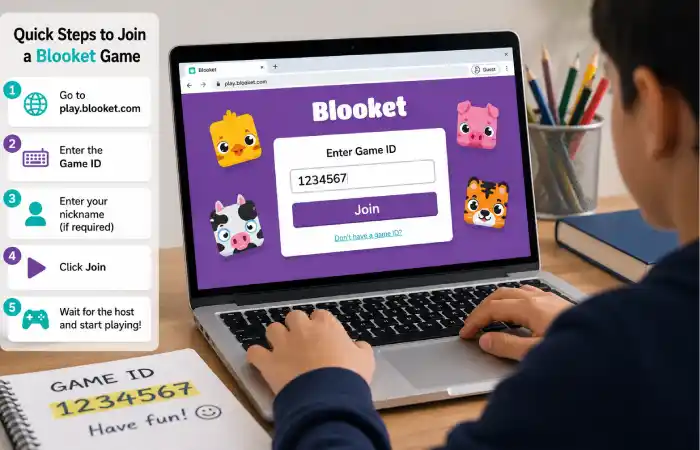
Once inside the session, it is important to wait for the host to begin rather than repeatedly refreshing the page. If the game does not appear after entering a valid code, checking the internet connection and confirming the code with the host can help identify the problem. Players should also make sure they are using the correct joining page and a supported, updated browser.
The Difference Between a Game Code and a Question Set
One source of confusion is the difference between a live game code and a question set. A question set contains the questions and answers used for an activity, while the game code identifies a particular live session in which those questions are being used. They serve different purposes even though they are connected during gameplay.
For example, a teacher could create or select a question set about mathematics and then launch a game using that set. Students would not necessarily need to locate the question set themselves. Instead, they could join the live activity using the session code supplied by the teacher. This separation makes it easier for hosts to organize activities while allowing participants to focus on joining and playing.
| Feature | Live Game Code | Question Set |
|---|---|---|
| Main purpose | Joins a live session | Provides questions for an activity |
| Usually provided by | Game host | Teacher or content creator |
| Connected to a session | Yes | Not necessarily |
| Can change between games | Yes | Can remain available separately |
| Used directly by players | Usually | Not always |
Why Blooket Codes Are Useful for Classrooms
One major advantage of blooket codes is that they reduce the amount of setup required for participants. Students do not necessarily need to search for a particular activity or understand the host’s preparation process. Instead, they can receive one code and use it to enter the correct session. This is particularly useful when a teacher wants an entire class to begin an activity at approximately the same time.
Codes can also make transitions between activities easier. A teacher may finish one game and later launch another activity for a different topic. Participants simply receive the new session information when appropriate. This approach can keep classroom activities organized without requiring every student to independently locate the correct quiz.
Using Blooket for Different Learning Activities
Although Blooket is often associated with classroom quizzes, its game-based format can support several types of learning activities. Teachers can use question sets for revision before an assessment, quick knowledge checks after a lesson, vocabulary practice, or introductory activities at the beginning of a class. The competitive elements can encourage participation among students who might find conventional review exercises less engaging.
The effectiveness of an activity depends heavily on the questions and learning objective rather than the game format alone. A well-designed question set can reinforce important concepts, while poorly targeted questions may simply create competition without meaningful learning. For that reason, the host’s preparation remains an important part of the experience.
What Makes a Good Blooket Game Session?
A successful session usually begins with clear instructions. Before sharing blooket codes, the host can explain what students are expected to do, which nickname rules apply, and when the game will start. This prevents confusion once participants enter the lobby.
The choice of question difficulty also matters. If every question is extremely easy, the game may provide little educational value. If the questions are consistently too difficult, students may become frustrated. A balanced set can include straightforward questions alongside problems that require students to apply what they have learned. The game mode can then provide an engaging structure around that content.
Tips for Players
Players can also take a few simple steps to avoid unnecessary problems. Using a stable internet connection and entering the code carefully can prevent common joining difficulties. Students should also follow the host’s instructions regarding nicknames and gameplay rather than attempting to disrupt the session.
It is worth remembering that a game code is generally intended for a particular activity. Sharing it outside the intended group may allow unwanted participants to enter, depending on how the session is configured. Respecting the host’s instructions helps maintain a smoother experience for everyone.
Can You Use Old Blooket Codes?
Old blooket codes generally cannot be assumed to remain active. A code is associated with a particular live session, so its usefulness depends on whether that session is still available. Once the host finishes the activity, participants may no longer be able to use the same code to enter.
This is why lists of supposedly permanent or always-working codes can be misleading. Even when a code was legitimate when originally shared, the associated session may no longer exist. If someone wants to participate in a current game, receiving the code directly from the current host is much more dependable than relying on an old list.
Troubleshooting Blooket Code Problems
If a code does not work, the first step is to verify that every digit was entered correctly. A single incorrect number can prevent the player from finding the intended session. If the code is correct, the player should confirm with the host that the game is currently active and that participants are joining through the correct interface.
Browser-related problems can sometimes cause difficulties as well. Refreshing the page, checking the connection, or trying an updated browser may resolve temporary issues. However, if several participants are experiencing the same problem simultaneously, the host may need to check the session rather than every student troubleshooting individually.
Blooket Codes and Safe Online Participation
Students should treat game codes as session-specific access information rather than something that should automatically be posted everywhere. When a teacher provides a code for a private classroom activity, participants should avoid sharing it publicly unless the host has explicitly invited outside players.
Responsible participation also includes using appropriate nicknames and following classroom rules. Game-based learning works best when everyone can participate without disruption. A simple code may provide access to a session, but good behavior and respect for the host determine whether the activity remains useful and enjoyable.
How Teachers Can Make Better Use of Game Codes
For teachers, blooket codes are most useful when combined with clear classroom procedures. A teacher can prepare the question set in advance, select an appropriate game mode, launch the activity, and then provide the current code to students. Establishing a consistent routine can reduce the amount of class time spent explaining technical steps.
Teachers can also use the results of game sessions as informal feedback. If many students struggle with the same concept, that topic may deserve additional explanation or practice. In this way, the game is not simply entertainment; it can become one component of a broader teaching strategy.
Conclusion
Blooket codes provide a simple way for players to connect to live game sessions without having to search manually for the activity being hosted. Their main purpose is to identify a particular session, which means they should not be confused with permanent access codes or question-set identifiers. Because live sessions can end or change, current information from the host is generally the most reliable way to join. For students, understanding how codes work makes joining games easier and reduces confusion when an old code no longer functions. For teachers, the system provides a convenient way to organize interactive quizzes, review lessons, and encourage classroom participation. Ultimately, the value of a Blooket session comes not just from entering the code, but from combining an engaging game format with well-prepared questions and meaningful learning goals.